Posts

Juneteenth

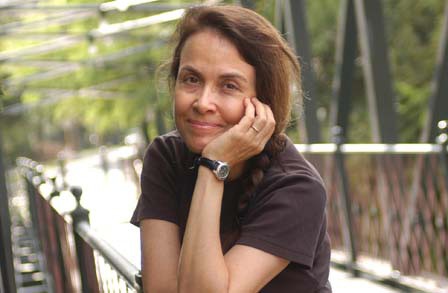
I am at the Stafford Challenge Conference at Lewis & Clark College in Portland, Oregon, and having a wonderful time. Naomi Shihab Nye is here, and she is one of my favorite all-time poets, so that’s a joy. I’m also enjoying getting to know Kim Stafford and looking forward to his workshop this morning.
If you’ve no idea what the Stafford Challenge is, please visit the website — lots of information about William Stafford, about the challenge to write a poem a day for a year, and about the founder of this terrific challenge, Brian Rohr.


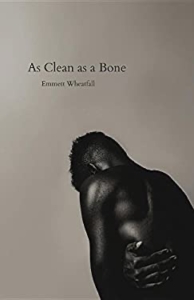
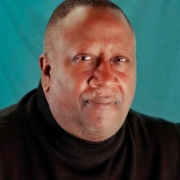
Another poet here, brand new to me, is Emmett Wheatfall. (New to me, she said, out of the well of her incredible ignorance. This guy has done and is doing SO much!)

If there is one thing I would do differently at this wonderful conference (if I were in charge of this conference, and other worries), I would begin the welcome on June 19 with “I, Too, Am America,” by Langston Hughes. And I would ask Emmett Wheatfall to read one or two of his poems.
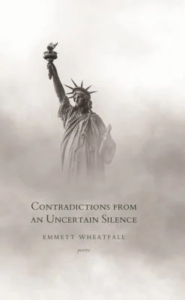
Luckily, Wheatfall was part of the program at last night’s reading. He is a big poet with a big voice and I would love to have more people, at this moment in history, hear that voice.

In My Country ‘Tis of Thee

In My Country,
‘Tis of Thee
I’m still not free.
Far be it from me
is my Sweet land of liberty.
I’ve lost the will to sing
Of thee I sing.
Yes, Land where my fathers died,
and I’m still not free.
I’m a descendent of slaves,
so I know nothing of
the pilgrims’ pride.
Black bodies
if stacked
rise From ev’ry mountainside.
I for damn sure am not free.
Let freedom ring
from the cracked Liberty Bell
in Philadelphia.
I live in the broken state
being the United States
where here
I’m still not free.

—Emmett Wheatfall, from Contradictions from an Uncertain Silence (Fernwood Press, 2025)

Contradictions has as its epigraph a line from Jean-Paul Sartre, “Every word has consequences. Every silence, too.” The book is dedicated “To all the poets who dare speak their mind….” One of his poems is a couplet, “If the 45th President Is Reelected”: “we will not have knocked the meteor out of the night sky / we will have punched a hole in that Founding piece of paper.”

“Every word has consequences. Every silence, too.” — Emmett Wheatfall

Wheatfall ended his reading last night by declaring (throwing out his arms like a Pentecostal preacher) “I love America!,” and then reciting “America the Beautiful.” Have you really looked at those words lately? How are we honoring them? How can we honor them better?

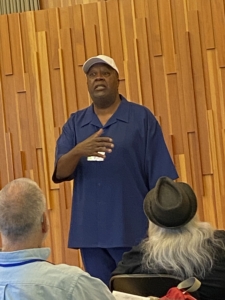
I want to add that, when I was able to talk with Emmett later in the day, he told me he was glad he wasn’t asked to be the voice for Juneteenth — three black people here, and, you know, he said. I also attended his workshop on performance and had my eyes opened — not only to all the performing he has done — but the possibilities for his workshop students to step up their own performance. You can learn more about Emmett Wheatfall at the Oregon Library Association website, or his personal website. Be sure to explore some of the links he offers.

And let me throw in some additional information about Juneteenth and this moment in our country’s history. I hope you read Robert Reich’s “The Truth about Juneteenth” and our current political situation (catch it here). Or see Heather Cox Richardson’s Juneteenth Substack.

William Stafford might advise us:

For My Young Friends Who Are Afraid

There is a country to cross you will
find in the corner of your eye, in
the quick slip of your foot — air far
down, a snap that might have caught.
And maybe for you, for me, a high, passing
voice that finds its way by being
afraid. That country is there, for us,
carried as it is crossed. What you fear
will not go away: it will take you into
yourself and bless you and keep you.
That’s the world, and we all live there.

—William Stafford (1914-1993)

(Poem used in Christopher Luna’s workshop on writing a political poem.)
These are messages that we can amplify.

On my walk this morning I saw a sign at a house across from the Lewis & Clark campus: Whoever you are and wherever you are from, I am glad you here.

So am I.

Bethany
 

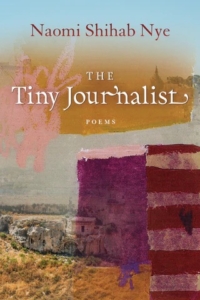
Naomi Shihab Nye, The Tiny Journalist

THE TINY JOURNALIST: POEMS, Naomi Shihab Nye. BOA Editions, Ltd., 250 North Goodman Street, Suite 306, Rochester, NY 14607, 2019, 124 pages, $17 paper, www.boaeditions.org.
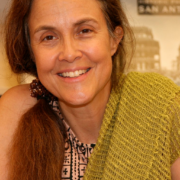
Naomi Shihab Nye is Palestinian-American and her father was a journalist all his life. The tiny journalist is a Facebook writer named Janna, a Palestinian girl who has been posting videos since the age of seven. The dedications, author’s note, and epigraphs in this book are an education on Israeli/Palestinian relations, Apartheid, and Palestinian suffering.

It Was or It Wasn’t

Arabic fairy tales begin this way,
so do Arabic days.
A pantry is empty
but Mama still produces a tray of tea and cookies
for the guest.
West is the still the way we stare—
knowing there’s blue space and free water
over there. There’s a Palestinian and a Jew
building a synagogue together in Arkansas.
They’re friends, with respect.
Actually our water
isn’t free either
nor are the fish my friends in Gaza
aren’t allowed to catch.
It was or it wasn’t a democracy,
a haven
for human beings,
but only some of them.
You can’t do that with people,
pretend they aren’t there.
It was or it wasn’t a crowd.
Diploma, marriage, legacy,
babies being born,
children being killed,
it was or it wasn’t going to work out.

These are not sophisticated, craft-conscious poems. They are like a voice, whispering in your ear. “If you live like a real human being— / that is the issue. Not winning and hunting others. / Not dominating. / Not sending their sewage their direction. / Did you know? Did you know they do this?” (from “Losing as Its Own Flower).

Advice

My friend, dying, said do the hard thing first.
Always do the hard thing and you will have a better day.
The second thing will seem less hard.

She didn’t tell me what to do when everything seems hard.

Rather than look for reviews to quote, or try to describe this collection, I would love to give you enough to reveal the many facets here. Probably not possible.

Grandfathers Say

Grandfathers say the garden is deep,
old roots twisted beyond our worry
or reach. Maybe our grief began there,
in the long history of human suffering,
where rain goes when it soaks out of sight.
Savory smoke from ancient fires
still lingers. At night you can smell it
in the stones of the walls.
When you awaken, voices
from inside your pillow
still holding you close.

The book ends with a short poem, “Tiny Journalist Blues”; the last lines, “Nothing big enough / but freedom.” Amen.

Read more and find additional links at https://www.boaeditions.org/products/the-tiny-journalist.


Naomi Shihab Nye’s Transfer

Thanks to Dave Bonta at the blog Via Negativa, and his twitter feed, I’ve been spending a little time over the last couple of days with other poetry bloggers. (It was a lovely surprise to find a bunch of retweets leading me to bethanyareid.com. Someone IS reading me!)

This infusion of enthusiasm came just in time. Maybe because I had just gotten my own poetry manuscript off to an editor, maybe because I spent the weekend awash in poetry, maybe because someone at Goodreads asked if the project wasn’t going to give me “poetry indigestion” — I was questioning my purpose. But, then, the tweet, the blogs, and the books themselves renewed me.

No indigestion here. It was my great pleasure to spend the day with Naomi Shihab Nye, one of my poetry heroes. I learned yesterday that she will be speaking in at WWU in Bellingham on April 28 and I immediately recruited some compatriots in the land of poetry and made our reservations.

I also — since I was at Village Books when I saw the poster — picked up a copy of her 2011 book, Transfer (another poetry book, Bethany? really?). Worth it.

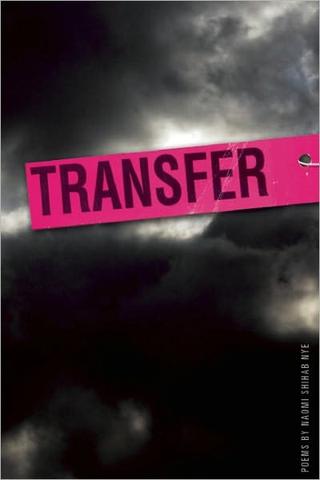
Transfer is a a tribute to Shihab Nye’s father, Aziz Shihab, who was a journalist and died of kidney failure and heart complications in 2007. The book includes some of his own words. I loved every poem. I took a picture of one poem, “Last Wishes,” about a 95 year old woman, and sent it to my friend Carolynne who just threw a birthday party for a 90 year old neighbor. I read lines aloud to my daughter. I wrote down these lines in my poetry journal: “There’s a way not to be broken / that takes brokenness to find it” (“Cinco de Mayo”). She manages to write out of and about her experience as a Palestinian American, and at the same time to capture what crosses and transcends cultural boundaries and speaks directly to my human heart. Her father was always looking for a home in the world, she tells us. At the same time, he — and his daughter — seemed to have found that home, in poetry, in writing, in family and friends, in acts of radical kindness to strangers.

Her poem “Kindness” is in my 2015 post, which you can find here.  And here is a poem whose title came from her father’s notebooks:

When One Is So Far from Home, Life Is a Mix of Fact and Fiction 

No one should hold that against you.
It’s a means of survival.
Sometimes I thought my best talent was
taking a skinny story, adding wings and a tail.
Dressing it in a woolen Bedouin cloak
with stitching around the edges.
Putting a headdress on it.
Making a better picture.
Your mother got mad at me sometimes
for telling a story differently but it wasn’t a lie,
just a story in different clothes
with other things emphasized.
My own mother dressed up stories for 106 years
till that last winter she rode in her bed
like a boat, sitting up to sleep.
Maybe it’s our duty to be shaped
a hundred times by the same stories.
We think we’re telling them
but really they’re keeping us alive,
memory oxygen breathed out and in.